


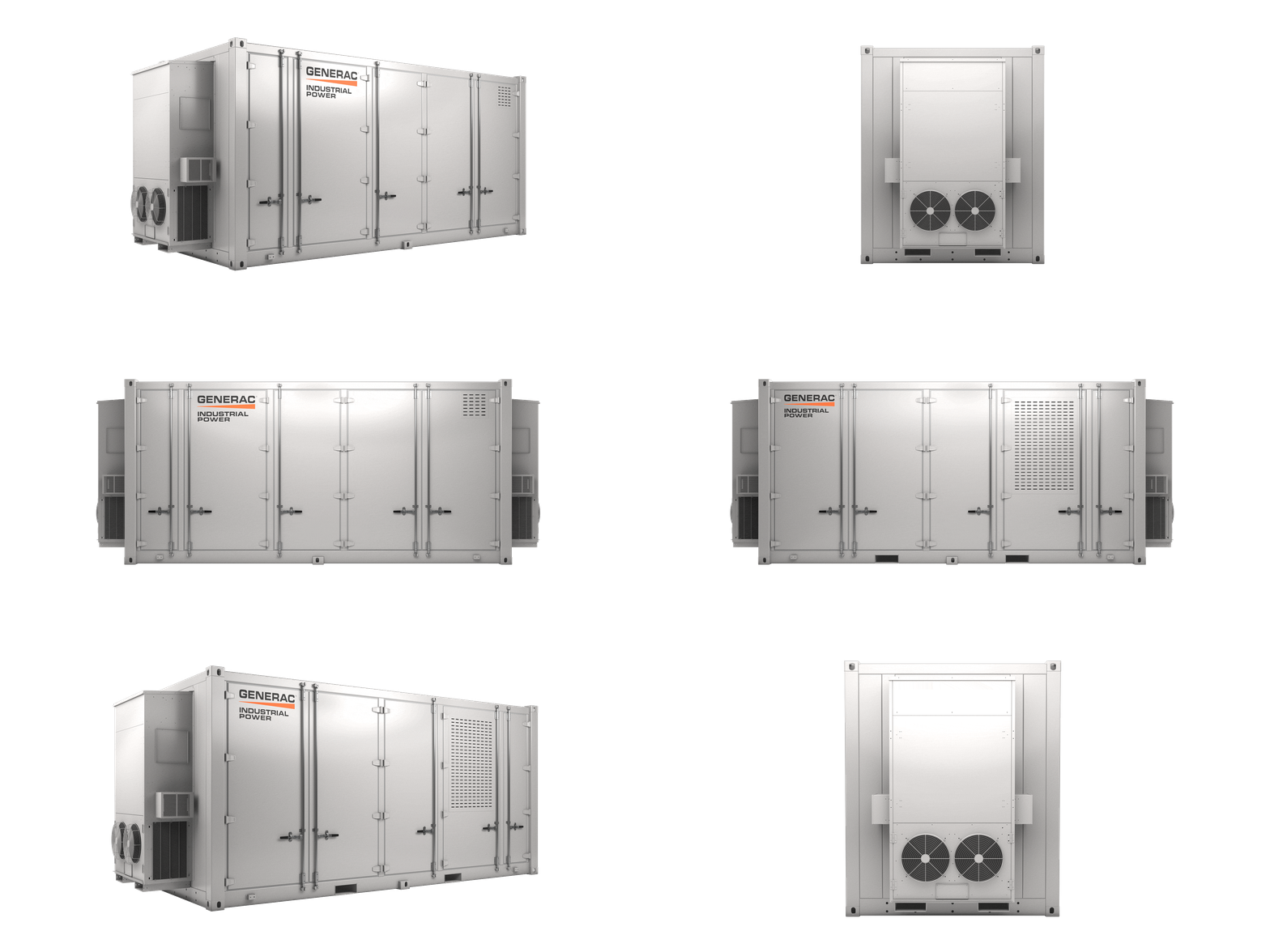
Industrial and commercial facilities need reliable power solutions to keep the lights on and equipment running, even when the local or municipal grid is unavailable. Battery energy storage systems (BESS) from Energy Systems Southeast (ESSE) give companies the peace of mind and resilience against brownouts and blackouts for uninterrupted operations and price stability. Learn more about how BESS solutions work and their benefits.
How Do Battery Energy Storage Systems Work?
Batteries store excess energy that can be used at a later time. Commercial and industrial battery energy storage systems are large-scale battery banks capable of holding excess power from the grid or from on-site renewable energy sources. Then, they either meter that power back to the grid or keep it ready for on-site demand surges and power outages at the facility. BESSes from ESSE run instantly at the first sign of trouble in order to keep energy flowing. They are integrated systems, so they’re immediately ready for use without setup delays and complications.
Main Components of BESS
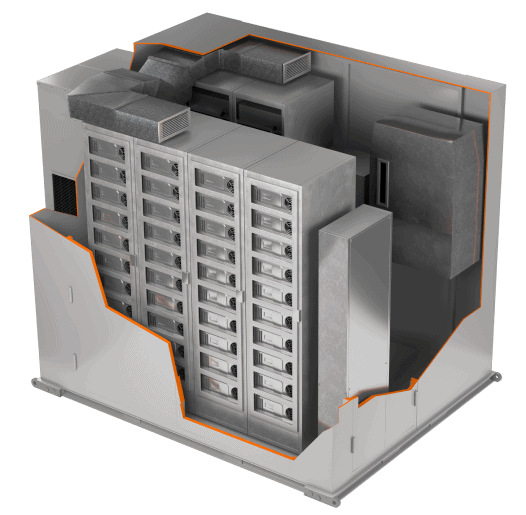
There are four main components of industrial BESS assemblies:
- Battery bank(s). This is where energy is stored. ESSE’s battery energy storage systems are scalable and range from a single 200 kWh unit to a group of battery banks with a capacity of multiple MWh.
- Battery management system (BMS). This system monitors the condition of the battery bank to assess, troubleshoot, and track performance over time.
- Energy management system (EMS). This software manages use of stored power and optimizes when to charge (i.e., at low-demand times) and discharge (i.e., at high-demand times) power.
- Power conversion system (PCS). Grid power is in the form of alternating current (AC), while batteries store electricity as direct current (DC). The PCS is a two-way inverter that converts AC to DC and DC to AC as current moves between the grid and battery storage.
Systems also include a separate thermal management system for liquid cooling, fire detection and suppression systems, user-friendly HMI controls, and a secure enclosure.
Benefits of BESS
Investing in an on-site, scalable BESS offers several advantages for businesses across industries. Systems are available with different capacities, physical footprints, and security features, as well as the option for ongoing service contracts.
Instant Backup Power With No Lag
With an on-site BESS, backup power is ready to use right when it’s needed, thanks to integrated energy management systems that sense the first warning signs of an outage and smoothly transition to the stored power. This instant backup provides reliable power during brownouts, short blackouts, and for critical operations during extended blackouts. Units can also instantly turn on when a peak demand cycle is recognized.
Access More Energy Savings
Backup power isn’t just for outages. A BESS allows facilities to switch to battery power temporarily during peak demand periods in order to lower energy costs (i.e., peak shaving), then charge or “refill” the battery during lower demand cycles or from renewable energy sources.
Monetize Excess Power
If you already generate renewable energy on-site and have an excess, an integrated BESS can send that power to the grid. Depending on your region and grid system, you may be able to sell this excess power or leverage it as a credit against your energy bill to lower costs.
Lower Carbon Footprint
Battery solutions can also reduce your carbon footprint by using energy efficiently and lowering peak demand. ESSE’s BESS systems can also be integrated with existing solar power generation systems at your facility.
When to Use a BESS
Your BESS sits on-site, ready to offset peak demand costs and as a regular supplement to your power requirements. Additional scenarios for BESS use include:
- In areas with high risks of frequent brownouts and blackouts due to aging grid systems, weather volatility, or geographic location.
- To minimize demand when municipal centers request lower usage, such as during winter storms or summer heat waves.
- To store off-peak energy, such as from renewable generation, to discharge during high-demand periods (i.e., peak shifting).
Generac Battery Energy Storage Systems From ESSE
ESSE powers industrial and commercial facilities with Generac battery energy storage systems that meet modern business needs. We have a large portfolio of scalable products and solutions for investing in secure access to power and growth.
We’ve been providing battery and power solutions since 2001, and today we operate across 14 states as Generac’s most awarded distributor, with a range of products and service plans to help companies meet their energy potential. Reach out today to explore how different BESS configurations can optimize your facility’s power consumption, or request a quote to get started.